

|
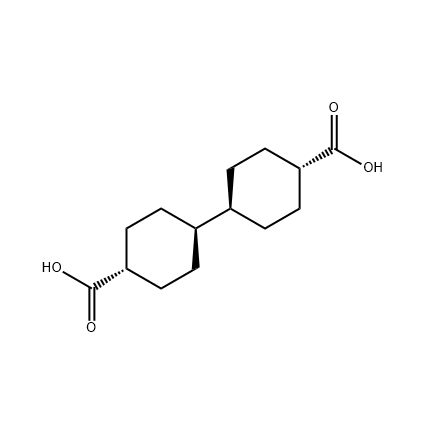
CAS NO.16200-85-4 (trans,trans)-[1,1′-Bicyclohexyl]-4,4′-dicarboxylic acid |
|
|
Product Name |
(trans,trans)-[1,1′-Bicyclohexyl]-4,4′-dicarboxylic acid |
|
Synonyms |
(trans,trans)-[1,1′-Bicyclohexyl]-4,4′-dicarboxylicacid;trans-4,4′-dicyclohexyldicarboxylicacid;[1,1′-Bicyclohexyl]-4,4′-dicarboxylicacid,(trans,trans)-;(trans,trans)-[1,1′-bi(Cyclohexane)]-4,4′-dicarboxylicacid |
|
CAS NO. |
16200-85-4 |
|
Purity |
98% min |
|
MF |
C14H22O4 |
|
MW |
254.32 |
|
Storage |
Preserve in a well-closed container and keep in cool, dry place, avoid light. |
|
Package |
In fluoride bottle/ Fluoride drums/iron drums/plastic drums/IBC Tank ,etc. |
|
Shipment method |
By Sea, Air, Courier door to door, etc. |
|
Loading Port |
China any port, Beijing, Shanghai, Hong Kong etc. |
|
Application |
(trans,trans)-[1,1′-Bicyclohexyl]-4,4′-dicarboxylic acid (CAS NO. 16200-85-4) is mainly used as a key intermediate for liquid crystal materials, advanced polymers, and specialty functional materials due to its rigid bicyclohexyl structure and dicarboxylic acid functionality. |
|
Contact |
Contact person: Mr.Benson Han Email: inquiry@dakenchem.com |
Frequently Asked Questions:
Q1: What is CAS NO. 16200-85-4 used for?
A: CAS NO. 16200-85-4, (trans,trans)-[1,1′-Bicyclohexyl]-4,4′-dicarboxylic acid, is mainly used as an intermediate in the synthesis of liquid crystal materials, specialty polymers, and functional organic compounds.
Q2: Why is CAS NO. 16200-85-4 valuable for liquid crystal applications?
A: CAS NO. 16200-85-4 has a rigid trans,trans-bicyclohexyl structure that helps improve molecular alignment, thermal stability, and structural control in liquid crystal molecules.
Application Cases
Case 1: Liquid Crystal Monomer Development
CAS NO. 16200-85-4 is used as a structural intermediate to introduce a rigid bicyclohexyl unit into liquid crystal molecules, helping manufacturers develop materials with improved thermal stability and optical performance for LCD applications.
Case 2: Specialty Polyester Synthesis
CAS NO. 16200-85-4 can react with diols or other functional monomers to produce polyester materials with enhanced rigidity, chemical resistance, and thermal properties for advanced coating and engineering applications.


